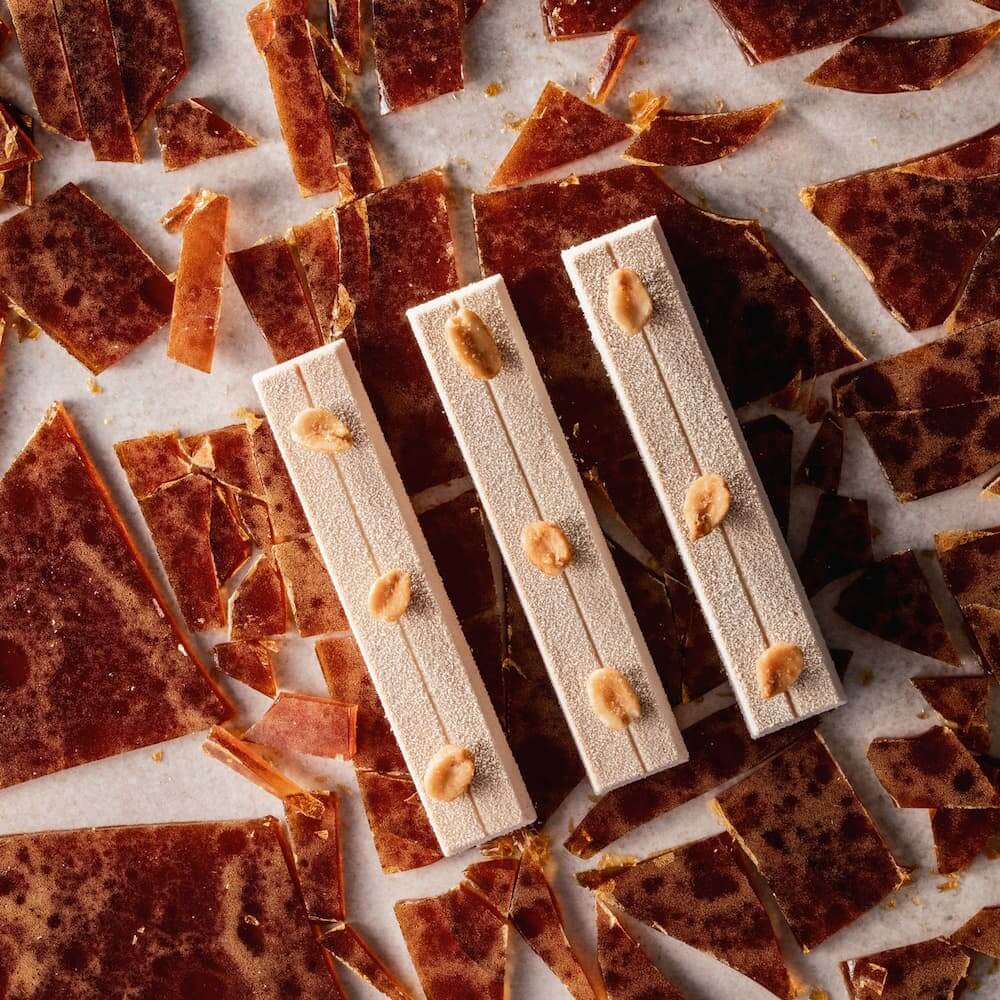


How do you balance sweetness in chocolate recipes?
How sweetness and roasted flavours build depth — or flatten chocolate pairings.
From chocolate behaviour to flavour structure
Once the behaviour of chocolate is understood, especially in dark chocolate, the next major pairing decisions are no longer about cocoa intensity alone.
They are about how sweetness and roasted notes are structured in the recipe.
Across all chocolate types (dark, milk, white, gold and ruby), sweetness and roast are the primary forces that either:
- build depth and comfort
- or flatten the taste experience entirely
Sweetness is not neutral in chocolate pairings
In chocolate-based recipes, sweetness is never just sweetness.
It shapes:
- how cocoa is perceived
- how bitterness behaves
- how long flavours stay present on the palate
When sweetness is uncontrolled, pairings tend to feel:
- heavy
- flat
- tiring
When it is structured, sweetness becomes a tool to:
- support cocoa
- extend flavour length
- create indulgence without overload
Caramelised and roasted notes: where sweetness gains complexity
Caramelisation and roasting transform sweetness.
They introduce:
- bitterness (from Maillard reactions)
- toasted and nutty notes
- longer flavour persistence
This is why flavours such as:
- caramel
- coffee
- malt
- roasted nuts
- brown butter
work so naturally with chocolate.
They don’t fight cocoa bitterness.
They align with it.

How sweetness behaves with different chocolates
With dark chocolate
Sweetness mainly plays a supporting and cushioning role.
- too little → bitterness feels dry or aggressive
- too much → cocoa loses definition
Caramelised sweetness works best when:
- it rounds bitterness
- reinforces roasted notes
- never replaces cocoa intensity
Typical chef pairings:
- dark chocolate + caramel
- dark chocolate + coffee
- dark chocolate + roasted hazelnut or almond

With milk chocolate
Sweetness is already present. Here, caramelised and roasted notes are used to:
- add depth
- prevent flatness
- introduce contrast without acidity
Milk chocolate pairs especially well with:
- coffee
- malt
- toasted nuts
- lightly caramelised fruits
The goal is structure, not more sweetness.

With white, gold and ruby chocolates
Sweetness dominates the base.
Roasted and caramelised notes become essential to:
- create tension
- avoid palate fatigue
- give direction to the pairing
Chef-recognised combinations:
- white chocolate + roasted sesame
- gold chocolate + coffee or toasted nuts
- ruby chocolate + caramelised nuts (with restraint)
Here, roasted notes often work better than fruit alone.
When sweetness flattens a pairing
Chefs usually recognise these situations quickly:
- sweetness accumulates without bitterness or salt
- caramel is layered on top of already sweet bases
- flavours lack evolution
In these cases, the idea isn’t wrong. The sweetness simply lacks structure.
Sweetness and roasted notes as pairing tools

Key takeaway
Sweetness is not a flavour to add. It is a structure to design.
Caramelised and roasted notes help sweetness:
- gain depth
- stay readable
- work with chocolate rather than against it
When you control sweetness, you don’t remove indulgence. You make it last longer.