

How do you build successful chocolate flavour pairings?
How chefs build taste balance with chocolate to create pairings that work consistently.
Balance comes before contrast
When a chocolate pairing does not work, the issue is rarely creativity. In most cases, contrast was added before the base recipe was properly balanced.
Acidity, spice, florals or bitterness are powerful tools. But when they are added before the recipe direction is clear, they tend to expose weaknesses rather than elevate flavour.
That is why many chefs start one step earlier, with a simple but decisive question:
Does this base recipe already taste right with this chocolate, in sweetness, fat and mouthfeel, before adding acidity, spice or other flavour notes?
If the answer is no, adding contrast usually makes the imbalance more visible, not less.
What “balance” means in a chocolate-based recipe
Balance is not about adjusting the chocolate itself.
It is about how chocolate behaves inside a recipe.
Chocolate brings cocoa, fat, sugar, acidity and roasted notes into a preparation. Balance is achieved when the other components in the recipe support that behaviour instead of fighting it.
In practice, this means:
- deciding what role chocolate plays in the recipe
- building structure, sweetness, fat and freshness around it
- only then deciding where contrast is needed
Once that base direction is clear, pairing decisions become much more controlled.
Every chocolate expresses these elements differently.
Understanding which ones dominate is the starting point for stable pairings.

How chefs build balance with different types of chocolate
Below is a practical overview of how balance is typically constructed across chocolate families. Chefs often use this overview as a quick sense-check during recipe development.
Building balance by chocolate type

What happens when balance is skipped?
Chefs will recognise these situations immediately:
- High-intensity dark chocolate paired with a sharp fruit preparation (for example lemon), without fat or sugar support
→ Result: narrow perception, aggressive acidity, bitterness becomes dry - Very sweet white chocolate paired with nut praline, without salt or freshness
→ Result: heavy sweetness, little flavour evolution, quick palate fatigue
In both cases, the idea itself is not wrong. But the base balance was never fully built.
How chefs typically restore balance in these situations

Dark chocolate + sharp fruit
Instead of removing the fruit, chefs usually rebalance the base by:
- adding fat or creaminess (ganache, crémeux, mousse structure)
- moderating acidity by changing the form of the addition (lemon in lemon curd, confit, zest infusion rather than juice)
- introducing controlled sweetness to round bitterness
The fruit stays present, but no longer fights the chocolate.

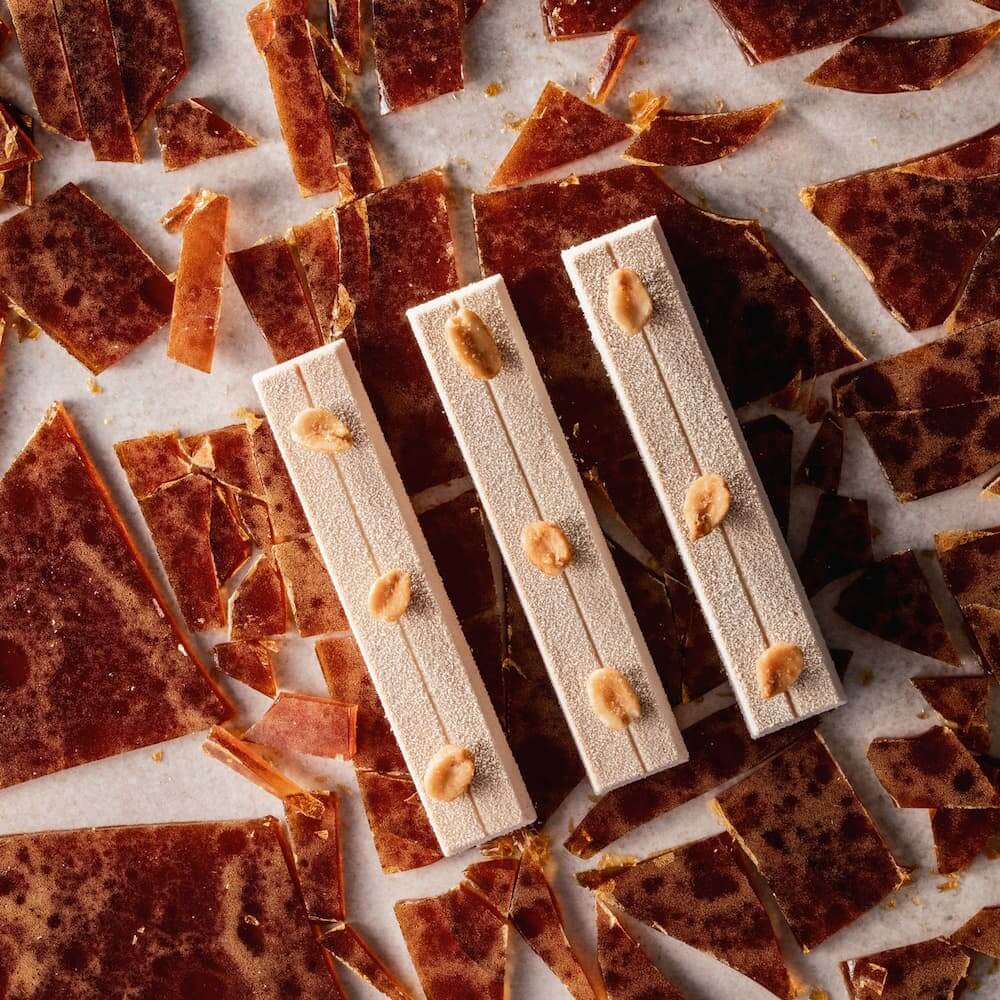
White chocolate + praline
Instead of using a sweet praline, chefs often rebalance by:
- combining a pure nut paste with a small amount of caramel
- adding salt to sharpen perception
- introducing bitterness (coffee, cocoa nibs, sesame)
- adding freshness through restrained acidity (citrus zest, fruit gel, light compote)
Sweetness becomes layered instead of flat, and flavour evolution returns.
Why balance makes contrast more effective
Once balance is in place:
- acidity feels fresh instead of aggressive
- bitterness feels structured instead of dry
- sweetness feels round instead of heavy
- spice and floral notes feel intentional instead of distracting
Contrast then becomes a choice, not a correction. This is why chefs who build balance first often need less contrast, not more, to achieve complexity.

Practical checkpoints chefs use before adding contrast
Before introducing strong contrasting notes, many chefs check:
- Is there enough fat to carry acidity?
- Is sweetness controlled or already dominant?
- Is bitterness structured or exposed?
- Does the chocolate already bring roasted or caramelised notes?
If these questions are answered, contrast can be added with confidence.
-
Key takeaway
Balance does not limit creativity. It is what allows creativity to hold together. When working with chocolate, balance is built by respecting how cocoa, fat, sugar and acidity interact. Once that foundation is solid, contrast becomes a powerful tool to add depth, elegance and memorability. This is why experienced chefs build balance first, and contrast second.