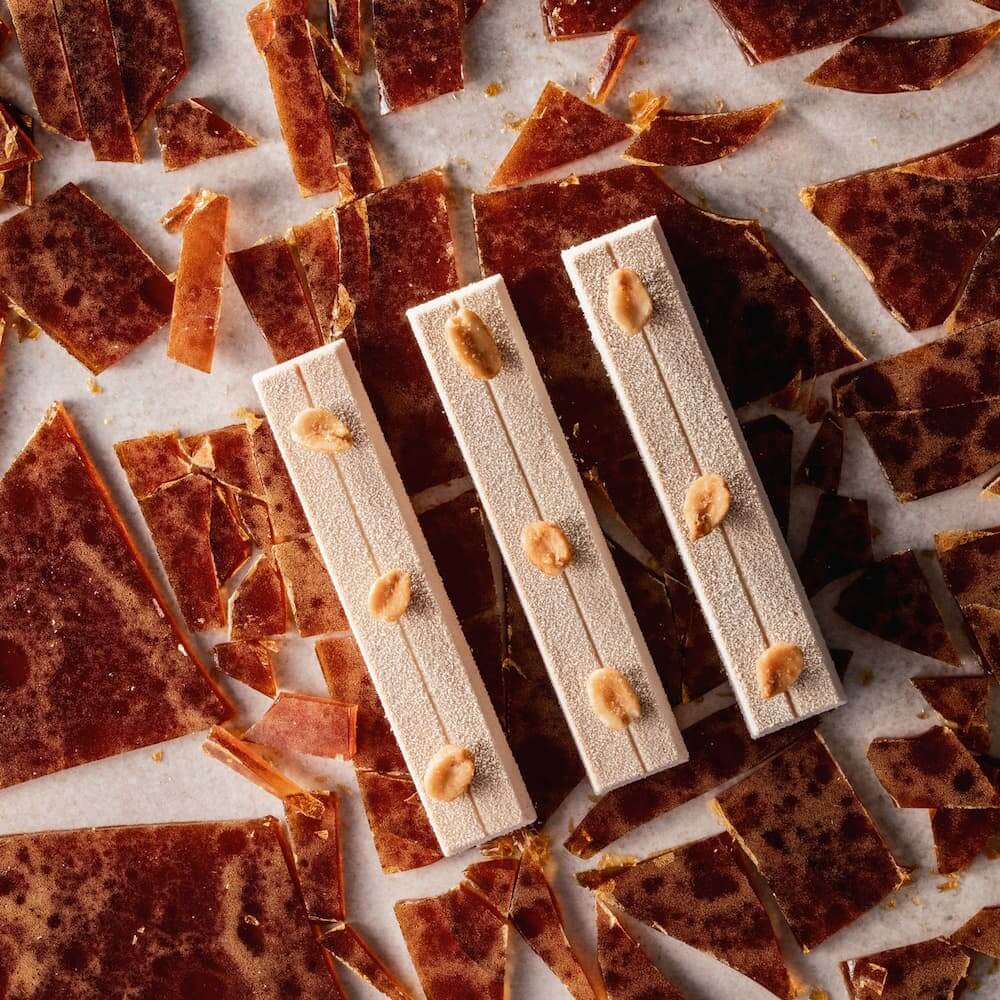


How to decide which flavour should lead a recipe?
Why chefs start from a dominant taste direction when building new creations.
Not all flavours play the same role in a recipe
In chocolate-based recipes, flavours are rarely equal.
Even when several ingredients are present, one usually defines the overall direction of taste.
That leading flavour determines how the other notes are perceived.
Identifying it early is not about limiting creativity. It is about giving the recipe a clear direction before refining it.
What “leading flavour” means in practice
The leading flavour is not always the strongest or most intense.
It is the flavour that:
- is perceived first on the palate
- defines the identity of the creation
- would change the recipe most if removed
In chocolate work, the leading flavour can be chocolate, but it can just as well be fruit, nuts, coffee, caramel, spice, or a floral profile.
The key is to decide which flavour should lead, and then build the recipe so it supports that choice.

A simple way chefs identify the leading flavour
When tasting a base preparation, chefs often ask:
- What do I perceive first?
- What stays longest on the palate?
- What defines the direction of the bite?
- If I remove one element, which absence would change the identity most?
Once that leading flavour is clear, pairing decisions tend to become faster and more consistent.
Not because options disappear, but because the direction is set.
The 4 roles chocolate can play in a recipe

Chocolate as the leading taste
Chocolate is the headline. The creation is recognised as chocolate-first.
Typical examples:
- dark chocolate mousse or crémeux where cocoa character is the identity
- bonbon fillings where chocolate profile is central
- chocolate desserts where the guest expects cocoa intensity first
What this means for pairing:
- other flavours should support chocolate, not compete
- acidity and florals need cushioning and control
- contrast works best when it stays precise
Chef reality: when chocolate leads, small additions can quickly become too loud. Control matters.

Chocolate as a carrier
Another flavour leads, and chocolate supports, frames, rounds.
Typical examples:
- fruit-led pastry where chocolate adds depth
- a praline dessert where nut is the identity and chocolate provides structure
- caramel-led recipes where chocolate brings cocoa backbone
What this means for pairing:
- chocolate choice should be reliable and supportive
- sweetness, fat and texture are adjusted to let the leading flavour stay readable
- the goal is coherence, not dominance
Chef reality: this is where consistency and repeatability win. Guests should read the leading flavour instantly.

Chocolate as a canvas
Chocolate provides a base that lets other flavours express themselves clearly.
This is most common with white chocolate and milder milk chocolates.
Typical examples:
- white chocolate ganache carrying citrus, passion fruit, raspberry
- milk chocolate used as a soft base for spices or botanicals
- desserts where chocolate is present, but not meant to be “the flavour”
What this means for pairing:
- balance often relies on freshness, bitterness, salt, and aromatic tension
- acidity lifts, bitterness structures, salt sharpens perception
- the chocolate supports the expression of the other ingredient
Chef reality: when chocolate is a canvas, the risk is flatness. The pairing needs lift, not more sweetness.

Chocolate in harmonic co-leadership
Chocolate and another flavour share the spotlight. Both are meant to be clearly present.
Neither is a background note.
Typical examples chefs use all the time:
- chocolate and hazelnut
- chocolate and coffee
- chocolate and caramel
What this means for pairing:
- the balance between sweetness, fat and bitterness becomes critical
- you want harmony, not competition
- small adjustments in chocolate choice, sugar level, or roasting note can shift the result a lot
Chef reality: this is where chefs fine-tune. Not to invent something new, but to make something classic taste exceptional.
When chefs talk about leading flavour, they often implicitly describe one of these situations. Chocolate can play four different roles, and each role changes how you build pairings.
Quick sense-check for recipe direction

Why this approach simplifies decisions
Once the role is clear:
- you know what needs to stay readable
- you know what needs to support
- you know where contrast is useful, and where it is risky
It removes a lot of unnecessary testing, and helps teams align faster when developing seasonal menus or assortments.
Key takeaway
Identifying one leading flavour is not a theoretical step. It is a practical way to set recipe direction.
Chocolate can lead, carry, act as a canvas, or share leadership.
Each role calls for a different way of building balance and choosing pairings. Defining that role early is one of the simplest ways to make pairing decisions clearer, faster and more consistent.