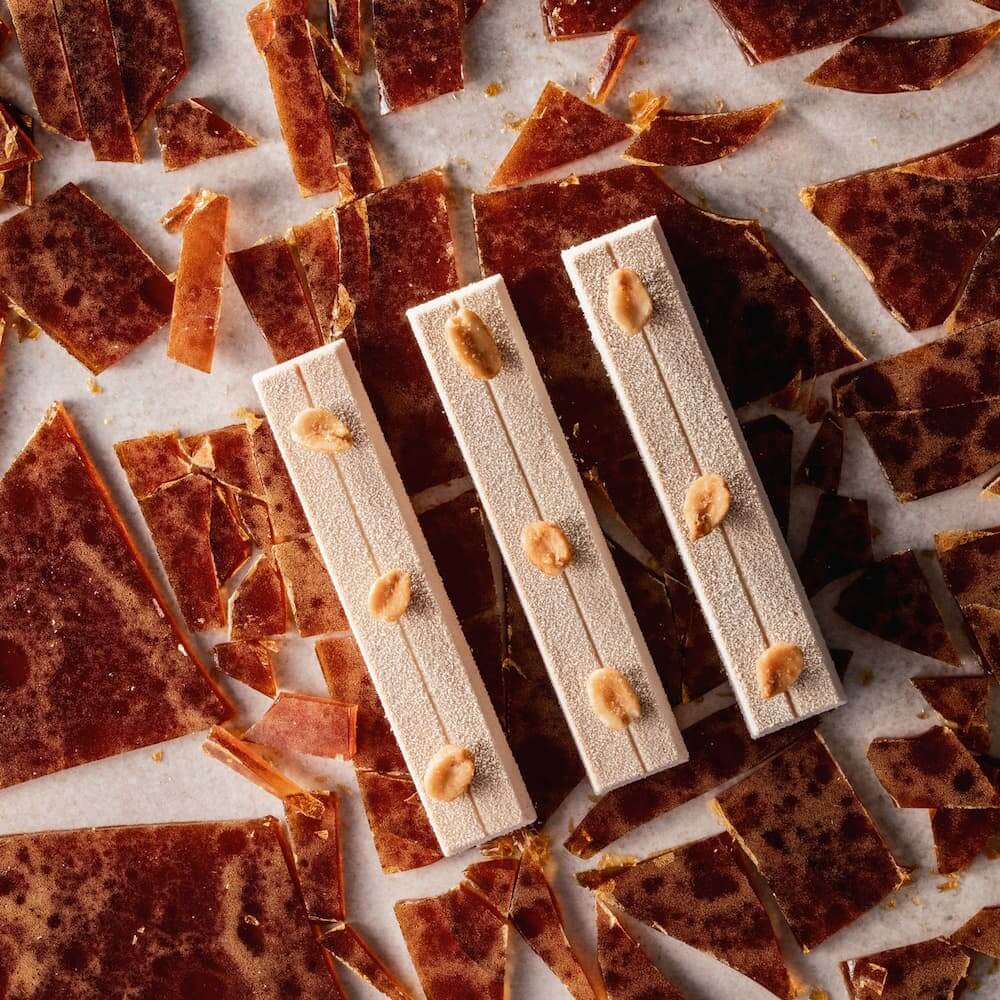


How do you add freshness to chocolate recipes?
How acidity, fruit and herbs bring lift to chocolate, without turning sharp.
After sweetness comes freshness
Once structure and sweetness are in place, freshness becomes the final lever in chocolate pairing.
Freshness does not replace indulgence. It refines it.
Across all chocolate types, freshness is what:
- lifts sweetness
- sharpens flavour definition
- keeps the palate engaged
But without structure, freshness quickly turns against chocolate.
Freshness is not the opposite of indulgence
With chocolate, freshness must always be carried:
- by fat
- by sweetness
- or by both
Used well, freshness:
- adds clarity
- creates contrast
- prevents palate fatigue
Used poorly, it:
- exposes bitterness
- narrows the taste experience
- makes pairings feel aggressive or unfinished
The difference lies in how freshness is built, not whether it’s used.

Fruit and chocolate: freshness needs direction
Yellow and exotic fruits (mango, passion fruit, apricot)
These fruits bring:
- rounded acidity
- aromatic lift
- natural sweetness
They work best when:
- chocolate is creamy or balanced
- acidity is integrated through curds, gels or crémeux
Typical chef combinations:
- milk chocolate + passion fruit
- white chocolate + mango or apricot
Here, fruit freshness lifts sweetness, rather than cutting it.
Red, blue and purple fruits (berry families)
These fruits bring:
- sharper acidity
- clearer contrast
- strong identity
They require:
- enough fat to carry acidity
- restraint in dosage
Chef-proven uses:
- dark chocolate + raspberry or blackcurrant (with structure)
- milk chocolate + strawberry (softened through compote or gel)
Without support, berry acidity quickly exposes bitterness.

Aromatics: herbs, teas and florals
Aromatic ingredients add freshness differently.
They:
- act early on the palate
- influence perception more than structure
- demand precise control
Chefs often prefer:
- infusions rather than direct additions
- dried or freeze-dried forms over fresh
- low dosage with high clarity
Recognisable combinations:
- white chocolate + basil infusion
- dark chocolate + Earl Grey or jasmine tea
- milk chocolate + mint (infused, not raw)
Aromatics work best when they frame chocolate, not compete with it.
How freshness interacts with different chocolates
- Dark chocolate
Freshness must be cushioned. Acidity needs fat or sweetness to avoid dryness. - Milk chocolate
Freshness helps control sweetness and bring lift. - White, gold and ruby chocolates
Freshness is essential, but must be precise to avoid sharpness or overload.
Freshness works best when it balances, not when it dominates.
Freshness as a pairing tool


Key takeaway
Freshness is a precision tool in chocolate pairing.
It works best when:
- supported by fat or sweetness
- integrated through form and dosage
- aligned with the role chocolate plays in the recipe
Mastering freshness doesn’t remove indulgence. It make chocolate taste clearer, longer and more alive.